
Smart Heating Design Starts with You
As an architect, your design plays a crucial role in a home’s thermal performance, and that directly affects both the upfront and long-term costs of central heating. The better a home retains heat, the more efficiently and affordably we can design the system, delivering greater value for your client.
At KE KELIT, we specialise in hydronic central heating systems that strike the ideal balance between capital cost, life-cycle cost, and comfort, without compromising on performance.
Capital Cost
We aim to minimise capital investment sensibly. Cutting costs too far can lead to higher operating expenses and reduced comfort down the line.
Ongoing Cost
We design systems that are efficient and low-maintenance, reducing running costs without requiring a disproportionate initial investment.
Comfort
Our systems deliver reliable, easily controlled heat tailored to your client’s lifestyle—ensuring comfort without ongoing cost burdens.

Your Influence on Thermal Performance
The amount of heat loss that your project will experience (through your design + materials) directly determines the amount of materials to heat it. It’s not rocket science: limiting your project’s heat loss as much as possible enables more flexibility for designing your client’s central heating system. Which means they’ll have to spend less - both upfront and ongoing. Which all adds up to a happy client.
Drivers of Thermal Efficieny
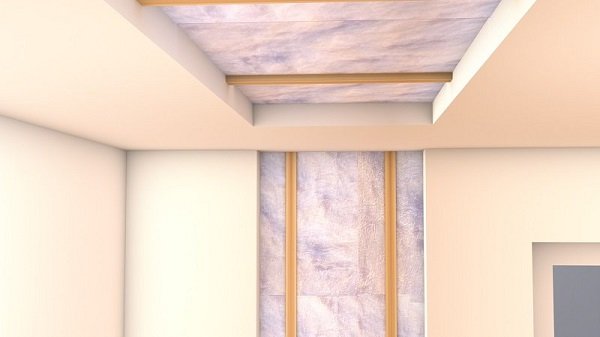
Insulation
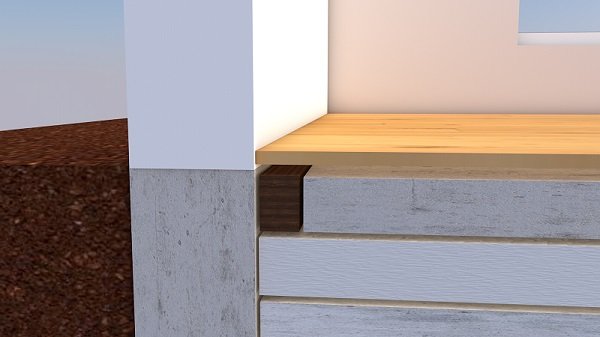
Insulation & Thermal Breaks
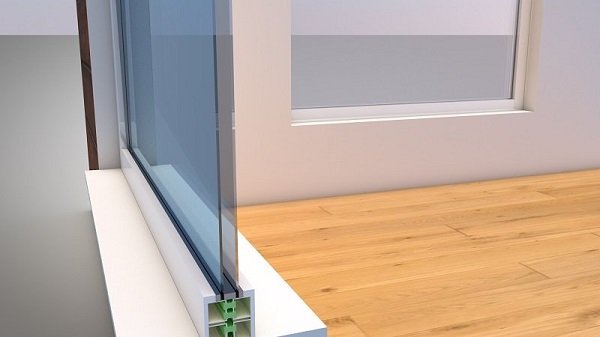
Glazing & Thermal Breaks
Reduce your clients operating costs by 10%
In the example below, we show how you can save them 10% a month.
Example bedroom (before thermal improvements)
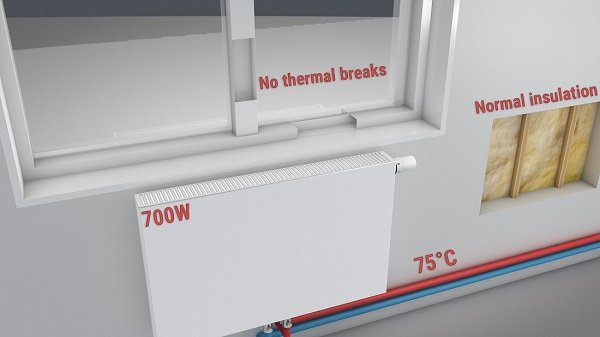
Let’s say that the thermal calculations have determined that a bedroom will need 700 watts to maintain the desired temperature. This pretend room has available space for a radiator measuring 600mm high and 1,000mm wide. To get 700 watts of heat output from a radiator in that space, the heated water will need to be 75°C.
Example bedroom (after thermal improvements)
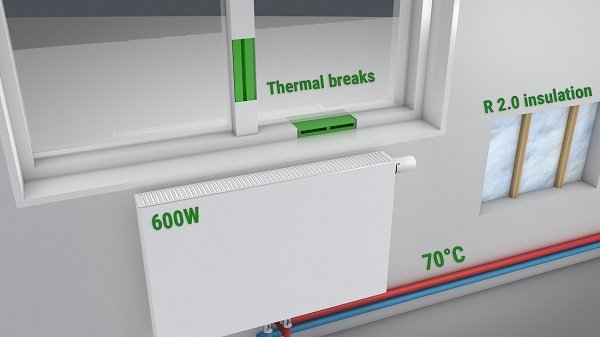
If we use R 2.0 insulation in the walls (instead of R 1.9), R 3.3 ceiling insulation (instead of R 2.9) and upgrade the windows slightly (to include thermal breaks in the aluminium frames), we can reduce the bedroom’s heat loss by 15%.
The same sized radiator now only needs to produce 600 watts of heat, which means the heated water temperature can be reduced to 70°C. Every degree in heated water temperature adds 2% to the ongoing running costs, so you’ve just saved your clients 10% per month. It’s worth focusing on thermal performance and heat loss of your project at the very start.
Let’s Talk Heating Design for Your Next Project
Book a meeting with a KE KELIT representative to discuss system options, technical support, and how our solutions can align with your architectural vision.